

Gemini_Generated_Image_szu6o1szu6o1szu6

The Origin of Fragrance: Concept, Purpose, and

The Origin of Fragrance: Concept, Purpose,


and Evolution into Modern Perfumery

Introduction: What Is Fragrance?
Fragrance is a carefully composed blend of aromatic substances designed to create a pleasant and emotionally resonant scent. Beyond beauty, fragrance represents identity, memory, culture, spirituality, and self-expression. Since ancient times, humans have used scent to communicate without words.

The Etymology of Fragrance
The word perfume comes from the Latin term “Per Fumum”, meaning “through smoke.” This highlights the earliest form of fragrance—burning aromatic materials so their smoke could rise toward the heavens.

1.   Fragrance Began as Smoke

The earliest form of fragrance was not liquid, but smoke.
Before the invention of distillation, ancient civilizations released scent by burning resins, woods, and aromatic plants.

Materials such as frankincense, myrrh, cedarwood, sandalwood, and pine resin were placed on fire or heated stones, allowing fragrance to rise into the air.

Archaeological evidence shows the use of aromatic smoke in prehistoric caves and burial sites, long before perfumes could be worn on the skin.
Liquid fragrance emerged much later, notably in ancient Egypt (c. 1500–1000 BCE) with early extraction techniques.

Fragrance, in its origin, was not worn—it was offered.

2. “Used in rituals and spiritual ceremonies”

True origin:

Fragrance was never created for beauty or attraction at first—it was created for ritual communication with the unseen.

Ancient belief:

Early civilizations believed:

  • Smoke carried prayers upward
  • Fragrance pleased gods and spirits
  • Scent acted as a bridge between worlds

Civilizations that used fragrance ritually:

Mesopotamia (3000 BCE)

  • Burned incense to honor gods like Ishtar
  • Believed scent purified sacred spaces

Ancient Egypt

  • Temples burned incense every morning and evening
  • Priests used kyphi (a sacred incense blend)
  • Perfumed smoke was part of mummification rituals

Indus Valley

  • Evidence of incense burners in Mohenjo-Daro
  • Fragrance linked to purification and meditation

Ancient China

  • Incense used in Taoist and Buddhist ceremonies
  • Smoke symbolized harmony between heaven and earth

 Fragrance was sacred before it was personal.

3. “Symbolized divine connection”

True origin:

Fragrance symbolized presence of the divine, not luxury.

Why scent was linked to gods:

  • Invisible like spirits
  • Powerful yet intangible
  • Could fill a space instantly
  • Could not be touched, only experienced

Examples:

Egypt

  • Gods were believed to have scented bodies
  • Pharaohs were perfumed to appear divine
  • Temples were “fed” incense daily to keep gods present

Judaism

  • The Torah describes Ketoret, a sacred incense
  • Only priests could prepare it
  • Wrong use was punishable—because scent was divine property

Christianity

  • Frankincense offered to Jesus
  • Incense still used in churches to symbolize prayer rising

Islamic tradition

  • Prophet Muhammad ﷺ loved pleasant scents
  • Burning oud and bakhoor is still part of spiritual hospitality
  • Clean scent = spiritual cleanliness

Fragrance was believed to attract divinity and repel chaos or evil.

4. The Survival & Biological Need

Masking odor and decay

Early humans lived close to nature—sweat, animals, smoke, blood, death.

  • Aromatic plants masked body odor
  • Resins reduced the smell of decay in burials
  • Smoke repelled insects and disease-carrying pests

🔬 Science connection:
Many aromatic substances (frankincense, myrrh, cedar) are antibacterial and antifungal.

➡️ Fragrance began as protection, not pleasure.

5. The Psychological Need (Emotion & Memory)

Humans needed emotional regulation

Smell directly connects to the limbic system (emotion & memory center).

  • Calm during fear or grief
  • Comfort during loss
  • Focus during rituals or work
  • Strength during war or hardship

Ancient people felt the effect long before they understood it scientifically.

➡️ Fragrance helped humans feel stable in an unstable world.

6. The Spiritual Need (Connection to the Unseen)

Why scent became sacred

Humans needed meaning beyond survival.

  • Smoke rises → symbol of prayer
  • Invisible scent → like spirit
  • Sweet aroma → sign of divine presence

Across civilizations:

  • Incense carried prayers
  • Sacred spaces were perfumed
  • Gods were believed to “consume” scent

➡️ Fragrance became a bridge between the human and the divine.

7. The Purification Need (Cleanliness & Order)

Before soap and sanitation:

  • Fragrance symbolized clean space
  • Smoke cleansed homes, temples, bodies
  • Scent separated sacred from profane

Examples:

  • Burning herbs after illness
  • Incense after funerals
  • Perfuming newborns and brides

➡️ Fragrance represented order over chaos.

8. The Identity Need

Fragrance as Social Language

Beyond ritual and healing, fragrance became a marker of identity and status.

In ancient societies, scent conveyed affiliation, authority, and role:

  • Tribe, priesthood, or royalty
  • Warrior or healer
  • Sacred office or societal rank

Examples from history:

  • Egyptian priests employed exclusive incense blends
  • Kings and nobles wore perfumes to signify divine favor
  • Certain resins and oils were reserved for temples and ceremonial use

Fragrance evolved from adornment to a statement of who one was, an invisible yet unmistakable signature of identity and status.

9. The Healing Need

Fragrance as Early Medicine

Long before the rise of modern medicine, aromatic substances formed the foundation of healing.
Civilizations understood that scent could calm the mind, protect the body, and restore balance.

In ancient Egypt, medical texts such as the Ebers Papyrus documented the therapeutic use of frankincense, myrrh, and cedarwood for wounds, pain, and inflammation.
Greek physicians, including Hippocrates, incorporated aromatic baths and oils into clinical practice, recognizing scent as a tool of physical and emotional harmony.

During the Islamic Golden Age, scholars refined steam distillation, transforming aromatic plants into concentrated medicinal oils. Avicenna’s Canon of Medicine—a cornerstone of medical science for centuries—formalized their therapeutic use.

Modern research now confirms what early physicians intuitively knew: aromatic compounds possess antimicrobial, anti-inflammatory, and calming properties.

Fragrance was not inspired by medicine.
Medicine emerged from fragrance.

The Origin of Fragrance in Ancient Civilizations

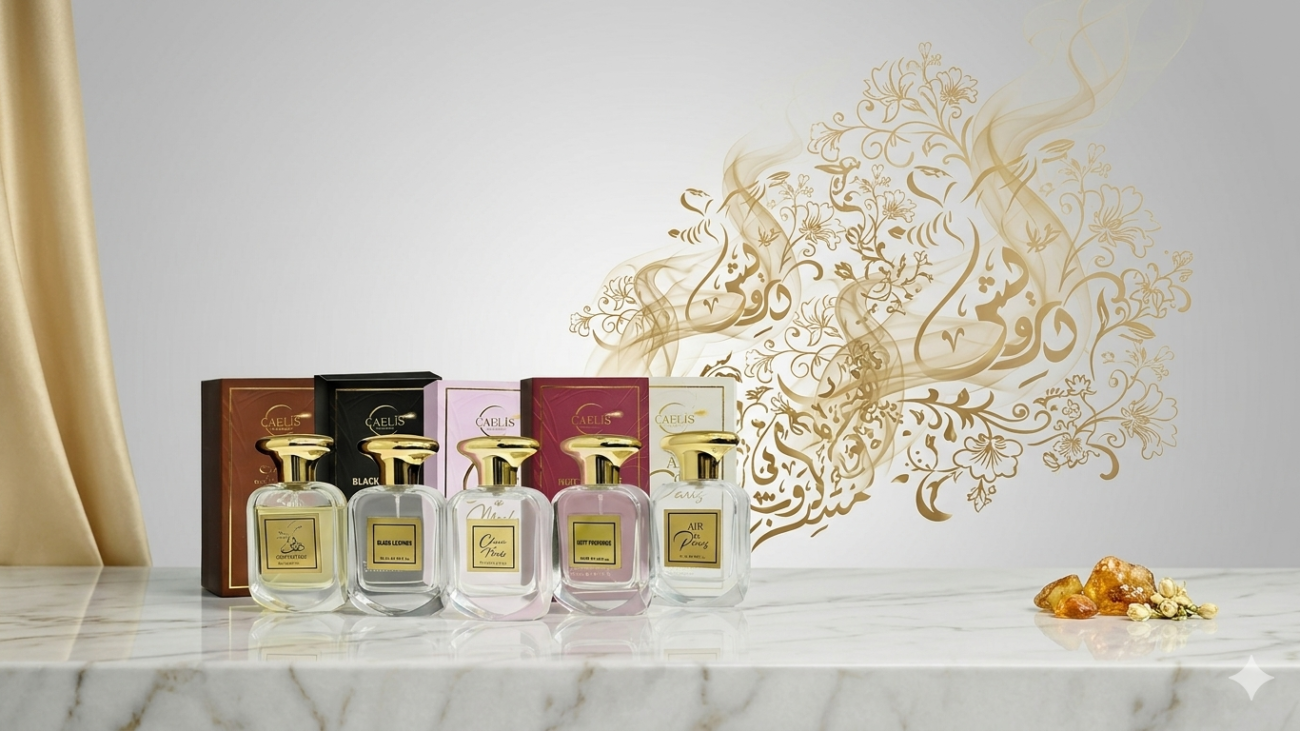
Fragrance is one of humanity’s oldest arts, born not from vanity, but from ritual, healing, and expression. Long before perfumes were worn, aromatic smoke marked the sacred, the social, and the medicinal.

In prehistoric societies, humans discovered that burning resins, woods, and herbs released aromas that soothed, purified, and protected. Civilizations elevated this practice into culture, embedding fragrance deeply into daily life and spirituality.

  • Mesopotamia (c. 3000 BCE): Incense honored deities and purified sacred spaces, forming one of the earliest recorded uses of ritual fragrance.
  • Ancient Egypt: Temples and burial rites relied on kyphi, frankincense, and myrrh. Perfumed smoke accompanied prayers, mummification, and ceremonies of divine kingship.
  • Indus Valley: Archaeological finds in Mohenjo-Daro reveal incense burners and ritual aromatic use, linking scent to meditation and purification.
  • Ancient China: Taoist and Buddhist traditions embraced incense as a medium of harmony, spiritual elevation, and ritual communication.

In these civilizations, fragrance transcended mere adornment. It became identity, devotion, and medicine, a subtle yet profound reflection of culture and human aspiration.

Fragrance, in its origin, was not worn—it was offered, shared, and experienced as a connection to the world beyond the senses.

Evolution into Modern Perfumery

Modern perfumery is the result of centuries of refinement, where ritualistic incense and primitive aromatic balms evolved into a sophisticated art and science. What began as sacred smoke used in temples and ceremonies gradually transformed through advancements in distillation, chemistry, and craftsmanship. Ancient techniques were preserved, perfected, and reimagined as civilizations learned not only to extract scent, but to design it with intention.

The Renaissance marked a pivotal shift, elevating fragrance from spiritual utility to personal luxury. Perfume became a symbol of refinement, hygiene, and social status, particularly within European courts. With the advent of alcohol-based perfumes and improved extraction methods, scents grew lighter, more complex, and more wearable—setting the foundation for modern formulations.

The 19th and 20th centuries ushered in a scientific revolution. Synthetic aroma molecules expanded the perfumer’s palette beyond natural limitations, allowing unprecedented creativity, consistency, and longevity. This fusion of nature and chemistry defined modern perfumery, transforming it into a structured discipline guided by olfactory families, accords, and precise composition. Today, modern perfumery stands at the intersection of heritage and innovation. It blends artisanal tradition with cutting-edge technology, balancing emotional storytelling with technical mastery. A contemporary fragrance is no longer merely a scent—it is an identity, a memory, and a silent expression of individuality, crafted to endure in an ever-evolving world.
Gemini_Generated_Image_6myt1c6myt1c6myt

Perfumery as a Gift: The Art of Giving Emotion

Perfumery as a Gift: The Art of Giving Emotion

Introduction: When a Gift Becomes a Memory

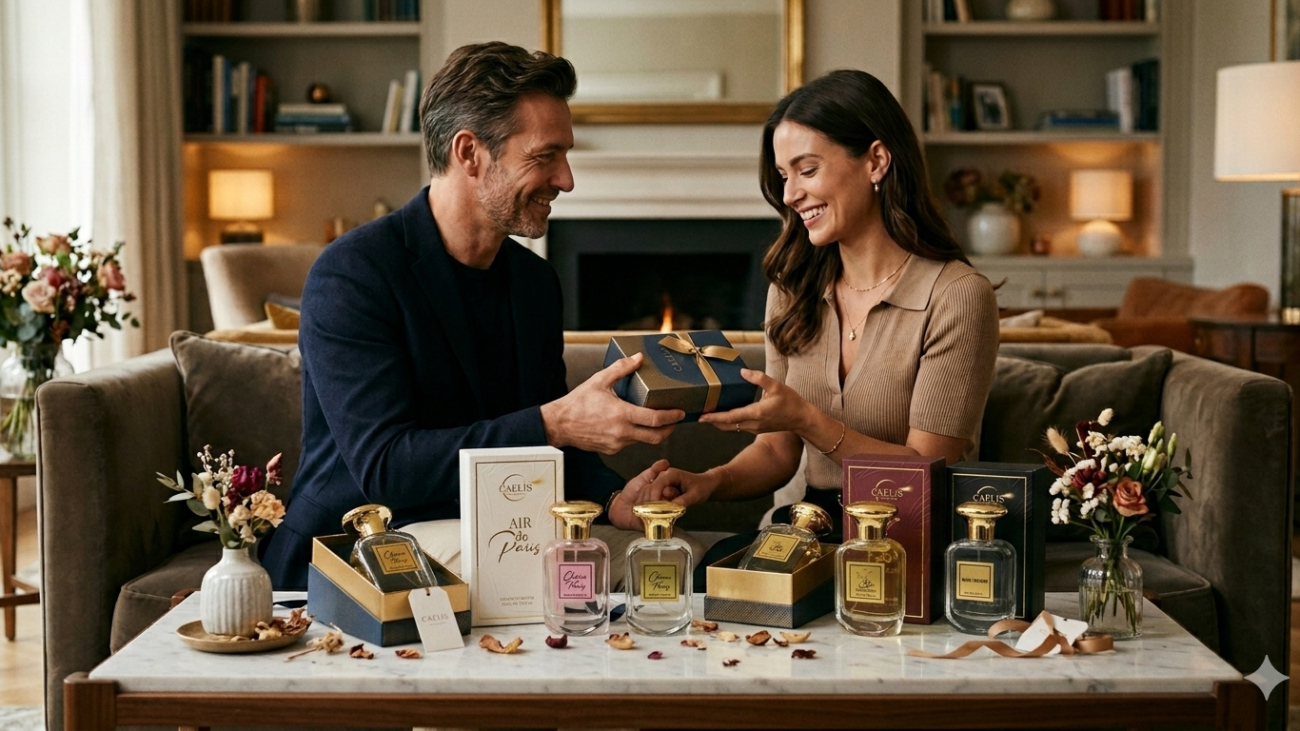
A gift, at its highest form, is not defined by its price or presentation—it is defined by how deeply it is remembered. Among all objects exchanged between individuals, perfume holds a singular position. It is intimate without being intrusive, personal without requiring explanation. To gift a fragrance is to offer an experience—one that unfolds over time, on the skin, in moments both ordinary and extraordinary.

This is where perfumery transcends material exchange and becomes emotional language.

The Psychological Power of Gifting Fragrance

Academic studies in sensory psychology confirm that scent is the strongest trigger of memory and emotion. Unlike visual or tactile gifts, perfume attaches itself to moments—first meetings, celebrations, quiet evenings, and milestones. When gifted, a fragrance becomes permanently associated with the giver, creating an invisible bond that lingers far beyond the occasion.

To gift perfume is not simply to choose a scent; it is to curate how someone will be remembered.

The Elegance of Thoughtful Selection

A meaningful gift reflects understanding. Choosing a fragrance requires intuition, empathy, and intention—qualities that elevate the act of giving into a personal statement. Whether for him or for her, a well-chosen perfume suggests attentiveness: I see you. I know you. I chose this for you.

This is why luxury perfumery is uniquely suited for gifting. It offers depth, nuance, and individuality—allowing the giver to express emotion without words.

Gifting as Identity Sharing

When someone wears a gifted fragrance, they are not only embracing a scent—they are carrying a story. Over time, the perfume becomes part of their identity, subtly merging their presence with the memory of the giver. In this way, fragrance gifting becomes an exchange of identities, a quiet intimacy that unfolds daily.

A Caelis perfume is designed precisely for this purpose: to feel personal, refined, and emotionally resonant—never generic, never fleeting.

Why Caelis Is the Perfect Gift for Him or Her

Rooted in elegance and guided by artistic restraint, Caelis creates fragrances that feel intentional rather than overwhelming. Each composition is crafted to adapt to the wearer, allowing the scent to evolve uniquely on every individual. This makes Caelis especially suited for gifting—where certainty is replaced by trust in refinement.

Whether gifted to him or to her, a Caelis fragrance communicates discernment, taste, and emotional intelligence. It is not chosen to impress—it is chosen to connect.

The Gift That Speaks Without Saying Anything

There are moments when words feel insufficient—when celebration, gratitude, love, or admiration demand a subtler expression. In such moments, perfume becomes the most eloquent gesture. A Caelis fragrance does not announce itself loudly; it lingers softly, leaving behind a signature that feels both personal and timeless.

To gift Caelis is to offer presence, memory, and meaning—wrapped not just in elegance, but in intention.

More Than a Gift

Perfumery, when given thoughtfully, becomes a shared experience rather than a single act. It evolves with time, deepens with memory, and personalizes itself with every wear. In this sense, a Caelis perfume is not merely a gift—it is a story the recipient continues to write. For him.
For her.
For moments that deserve to be remembered.

logo

The Philosophy Behind the Name

The Philosophy Behind the Name

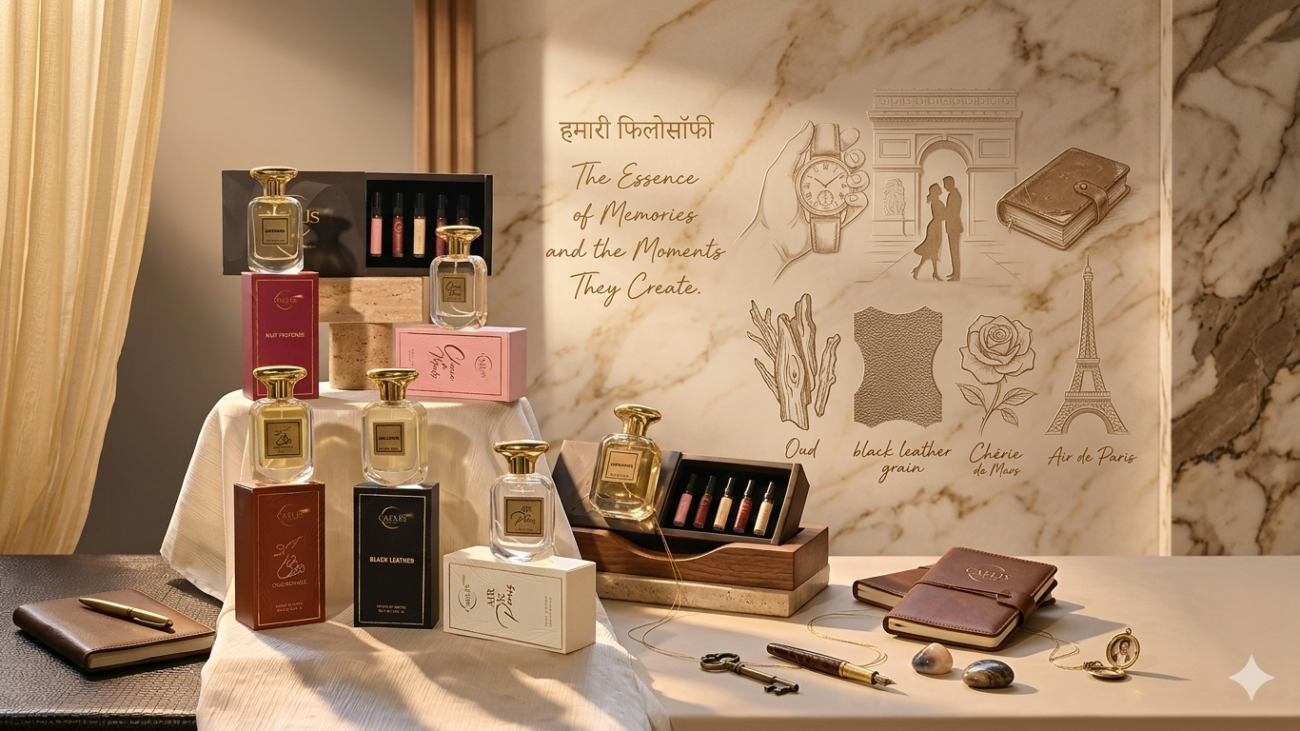
We searched for a name that could hold emotion, memory, and depth.
We found Caelis — originates from Latin, meaning heavenly or of the sky

Because fragrance should not shout.
It should rise softly, stay gracefully,
and become part of who you are.

Caelis is the art of subtle power.
#Caelis #FragranceWithMeaning

  1. The Thought Behind Our Fragrances

Not everyone wears fragrance for attention.
Some wear it for themselves.

For the quiet confidence before an important moment.
For the comfort of familiarity in a crowded room.
For the memories that don’t need words.

Caelis was created for those moments.
Not to follow trends but to belong to your story.

This is what makes Caelis special.
It doesn’t try to be for everyone.
It feels personal — like it was made just for you.

— Caelis
A memory that lingers

#Caelis #QuietLuxury #YourSignatureScent

✨ The Concept Behind Our Fragrances

Some people choose fragrance to be noticed.
Others choose it to feel complete.

For those who walk into a room and don’t need to speak first.
For those who prefer depth over volume.
For those who find strength in stillness, and beauty in softness.

Our fragrances are curated for different expressions of self.
Some carry warmth, depth, and quiet intensity.
Others bloom gently — floral, delicate, yet unmistakably present.

Each Caelis fragrance is designed to settle into you
to feel natural, familiar, and deeply personal. — Caelis
A memory that lingers.

Gemini_Generated_Image_zcnsrzcnsrzcnsrz

The Aesthetic & Creative Need of Perfumery

The Aesthetic & Creative Need of Perfumery

Introduction: Beyond Utility, Toward Expression
Perfumery did not emerge merely to mask odor or serve ritualistic functions; it evolved as an aesthetic and creative pursuit once humanity’s basic needs were fulfilled. When survival gave way to self-awareness, fragrance became a medium of expression—an invisible art form capable of communicating beauty, emotion, and identity. This transition marks the birth of perfumery as an artistic discipline, where scent transcends function and enters the realm of creativity.
At Caelis, this philosophy lies at the heart of fragrance creation—where perfume is not simply worn, but experienced.

The Human Desire for Beauty and Sensory Art
From ancient civilizations to modern societies, humans have consistently sought beauty as a means of emotional fulfillment. Visual art, music, architecture, and literature all serve this intrinsic desire—and perfumery stands among them as the most intimate of arts. Unlike visual or auditory forms, fragrance engages memory and emotion directly, bypassing logic and speaking to the subconscious.

This aesthetic need drove perfumers to move beyond single-note aromas toward complex compositions, carefully balancing top, heart, and base notes. Fragrance became a crafted narrative rather than a raw material—an evolution guided by creativity as much as technique.

Perfumery as an Artistic Discipline
Modern perfumery is often described as olfactory art. Like painters or composers, perfumers work within a structured framework while exercising boundless creativity. Notes replace colors, accords replace harmonies, and balance defines mastery. Each fragrance composition reflects intention, cultural influence, and artistic vision. Luxury perfume houses, including Caelis, approach fragrance creation as a deliberate artistic process—where inspiration, concept, and execution align to form a coherent olfactory identity. This elevates perfumery from product creation to creative authorship.

The Role of Creativity in Fragrance Composition
Creativity in perfumery lies in interpretation rather than invention alone. Natural raw materials have existed for centuries, yet it is the creative blending, contrast, and reinterpretation that gives rise to originality. Floral notes can be rendered bold or delicate; woods can feel warm, mysterious, or divine.

At Caelis, creativity is guided by emotion and atmosphere—crafting fragrances that feel ethereal, refined, and timeless. Each composition is designed not just to smell pleasing, but to evoke a state of being.

Aesthetic Identity and Personal Expression
As societies evolved, fragrance became deeply personal. Perfume transformed into an extension of identity—chosen not for necessity, but for resonance. Individuals began selecting scents that aligned with their mood, character, and presence, reinforcing perfumery’s role as a creative companion to self-expression.

This personal dimension defines modern luxury perfumery. A Caelis fragrance is not imposed; it is discovered—reflecting individuality through subtlety, depth, and elegance.

Caelis: Where Aesthetics Meet Olfactory Creation
Rooted in refinement and inspired by the ethereal, Caelis embodies the aesthetic and creative need that defines modern perfumery. Each fragrance is a balance of artistry and intention, where creativity is disciplined and beauty is purposeful. Caelis does not follow trends; it interprets emotion, translating abstract feelings into tangible scent.

In doing so, Caelis honors perfumery not merely as a craft, but as an enduring art form—created for those who seek meaning, elegance, and identity in what they wear.

Perfumery as a Creative Necessity
The aesthetic and creative need of perfumery reflects humanity’s deeper pursuit of beauty and meaning. Once essential needs were met, fragrance emerged as a language of emotion and art—an invisible signature that defines presence without words. In the modern era, this need continues to shape luxury perfumery, where creativity, craftsmanship, and identity converge.

Through this lens, Caelis stands as a contemporary expression of an ancient desire: to create beauty that lingers, inspires, and transcends time.